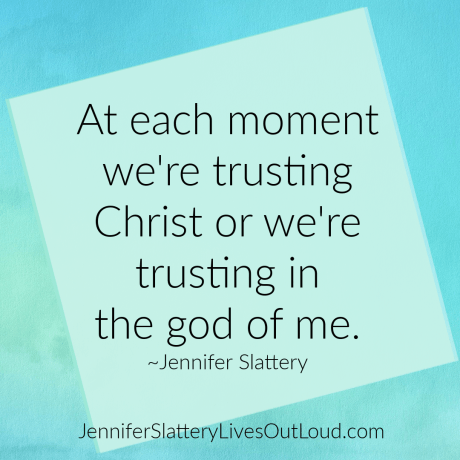
Quote pulled from post on teal blue gradiant background

Beneath every healthy or dysfunctional relationship, we’ll find boundaries at work. Healthy, God-honoring boundaries lead to increased health; Without them, people begin to hide, trust shatters, emotional intimacy decreases if not dies all together, and isolation grows.

When my daughter was younger, one of her friendships turned unhealthy and caused her considerable and consistent pain. She began justifying the poor behavior, telling herself the behavior didn’t, or perhaps more accurately, shouldn’t hurt and also that the other person couldn’t help it and therefore needed patience and grace. The problem is, apart from truth, grace isn’t grace. It’s enabling. As a result, over time, things became worse—the friend’s behavior, my daughter’s wounds, and the relational dysfunction.

And I struggled to see beyond the problem in that moment to all God was doing and was yet to do. Grieved by my daughter’s pain, I wanted to step in, to meddle, to fix. To control. To grasp and hold tight to things God wanted me to release—because I was afraid.

This is often my greatest challenge when setting boundaries, and honestly, this is a battle I continually fight. Many times, I know the right thing to do, but my heart struggles to comply. I don’t find it all that hard to take and maintain full responsibility for my behavior, emotions, and reactions. When I sleep in and miss a meeting, that’s on me. When I blow a deadline, that’s on me as well. When something angers me and I lose my temper? Me again.

I don’t like staying in my lane, however, when I know there’s a big old cavern up ahead in my loved one’s lane. When that occurs, I want to veer right and force them onto the shoulder or into a ditch, or perhaps rip their keys from their hands.

As ironic as this may sound, the greater my love, the harder boundaries become. The harder it is to not only realize but accept that I am not responsible for anyone else’s behavior, emotions, and reactions—nor should I attempt to make myself so. Living in that truth, however, takes courage, strength, surrender, and significant trust in Christ.

An old pastor from Louisiana used to say, “Don’t try to be the Holy Spirit in anyone’s life.”

So, what if we’re dealing with something more consequential than a hurtful friend? What if our loved one is heading toward serious self-destruction? What if their choices could, and likely will, destroy everything our relationship rests on, and thus, our relationship itself? I’m relatively certain those scenarios make us all a bit weak-kneed, because we know there’s a potential for deep, heart-breaking loss.

The greater the risk, the more challenging it is to set boundaries, which also means, the greater the potential for dysfunction.

I have to remind myself of this. When life becomes challenging, for me and those I love, all I can see are the danger signs directly attached to whatever behavior or choice concerns me. Choices I have zero control over—which may be why I’m so tempted to fight for control. To elevate the weakest, most deceptive, and often, destructive, god of all time—the god of self.

In short, I act as if God has somehow fallen down on the job and needs me to step in and meddle and fix and arrange.

This lies at the root of every choice and action. At each moment, I’m living in surrenderedquote pulled from post trust and obedience to Christ or I’m trusting in the god of me.
When I reach this place, I need to get honest with myself, with my fears, and with God. Do I really believe everything I claim to be true about God? Do I believe that He’s all-knowing, all-seeing, all-loving, faithful and true? Do I believe that He has the power to change hearts—and that I don’t, no matter how much I argue, nag, pester, or cajole? Do I believe He has the power to bring order to mental chaos, clarity to confusion, and truth to deception—not only in the minds of those I’m worried about but within me as well?

Do I believe God has a plan in the mess, and that He’ll bring good through it? That He longs to use the situation, as painful as it might be, to grow us all and make us more like His Son?

My internal struggle reveals I likely don’t truly, deeply believe those things, therefore the first and greatest work God wants to do is within me. And so, I need to hit pause. I need to quiet myself before Him and ask Him some heart-probing, life-changing questions, like:

  • What sin are You wanting to purge within me?
  • What lie or lies are You revealing?
  • What cracks in my faith do You need to mortar with truth?
  • And just as importantly, how do You want me to model life, light, health, and faith through this situation?

The next time we land in this place, may God remind us who He is, who we are, and who we are not. What He’s assumed responsibility for, and what He has not conceded to us.

He is the initiator, redeemer, Savior, Counselor, Guide, Teacher, and Father. The One who knows all and sees all and is in all.

Scripture tells us:

God:

Our role is to:

  • Listen for His guidance.
  • Speak truth.
  • Honor God’s principle of sowing and reaping. (This means not attempting to shield others from the consequences for their actions.)
  • Seek personal growth.

When do you find it most challenging to set and maintain healthy boundaries? Why do you think this might be? Share your thoughts with us in the comments below, because we can all learn from and encourage one another!

If you haven’t already done so, you may want to listen to the following podcast episodes:

On Faith Over Fear:

The Courage to Set Healthy Boundaries

The Courage to Have Hard Conversations

On my Thriving With Chronic Illness podcast:

Setting Healthy Boundaries Part 1

Setting Healthy Boundaries Part 2

Image for Wholly Loved's Relational Health Bible Reading PlanYou might also find Wholly Loved Bible reading plan, 20 Days of Relational Health, found on the YouVersion Bible plan. You can access it HERE.

Woman contemplating with quote from post.

We reveal who we truly are in how we respond when the stakes feel high. The higher the stakes, the more vivid and accurate the self-revelation. In those moments, our actions scream truth louder than any spoken claim or image portrayed. Will we do the hard-right thing, though it might come with a lofty cost, or will we choose that which feels convenient or safe?

I say feels because I’ve discovered the opposite is true. When we choose self-preservation above integrity, we begin to chip away at those things which are good and strong and admirable within while growing all that is ugly and false until one day we look back and wonder what we’ve done and who we’ve become.

Regret is such a heavy, suffocating burden to carry.Woman walking into the sunrise with quote from post.

Scripture is filled with such powerful examples, stark contrasts, between those who chose to act with courage and integrity though faced with seemingly impossible circumstances; seemingly impossible odds and those who pursued what was easy, convenient, or “safe.” Their actions created ripple effects of good or evil felt for generations; the fallout of their lives recorded for all time.

Consider the unnamed mother in Exodus 2. She lived during a horrific, terrifying, seemingly hopeless time in ancient Israel’s history. They’d been living in oppression and slavery for 400 years in Egypt. Fearing this emerging and rapidly growing people group would join forces with their allies, the Egyptians did all they could to beat them down. When this didn’t work, the Pharaoh “gave this order to all his people: ‘Throw every newborn boy into the Nile River.’”

A man named Moses was born during this dark time in history. Initially, his mom hid him for three months. This took such courage! Doing this placed her and her entire family in great danger. No doubt, if the authorities discovered what she’d done, they’d make her and her family a public example of what happened to those who tried to defy the Pharaoh.

Three months is a long time to live in terror.

A long time when it would be easy to talk yourself out of doing the hard-right thing.

A long time to be praying and praying, seeming to get no answers and no help from God.

A long, long time to hear the anguish all around her as other Hebrew boys were ripped from their mother’s arms to be drowned in the Nile.

But she remained courageous.

When it became impossible to keep the child hidden, and likely when it felt as if she created a basket using reeds and waterproofing it with tar, placed the baby inside, and brought the child to the Nile River.

Can you imagine how long that walk to the river must have felt? The terror every step must’ve brought? One cry from the baby inside her basket would alert the Egyptian slave drivers to what she was doing. One peek into the basket, one question, “What do you have there,” could’ve resulted in her death, if not worse. Likely worse, again, to make an example of her to all the other Hebrew moms who might be tempted to courageously rescue their children as well.

Again, a long time to talk herself out of every courageous step. Was she really doing the right thing? What about the rest of her family? What if her actions harmed not just them, but all of her people and resulted in all the fathers, the progenitors, death as well? But she kept walking, and hid her beloved child in the reeds. And she likely couldn’t fathom any way this child could be saved. But she knew she had to do something. She couldn’t simply sit back and allow his murder.

And then, the miracle happened.

Scripture tells us:

“Then Pharaoh’s daughter went down to the Nile to bathe, and her attendants were walking along the riverbank. She saw the basket among the reeds and sent her female slave to get it. She opened it and saw the baby. He was crying, and she felt sorry for him. ‘This is one of the Hebrew babies,’ she said.

“Then his sister asked Pharaoh’s daughter, ‘Shall I go and get one of the Hebrew women to nurse the baby for you?’

“‘Yes, go,’ she answered. So the girl went and got the baby’s mother. Pharaoh’s daughter said to her, ‘Take this baby and nurse him for me, and I will pay you.’ So the woman took the baby and nursed him. When the child grew older, she took him to Pharaoh’s daughter and he became her son. She named him Moses, saying, ‘I drew him out of the water'” (Ex. 2:5-10, NIV).

Not only did God intervene and rescue her child, but He did so using someone from among her enemies! From within the Pharaoh’s household. One day, the Pharaoh’s daughter—daughter of the very man that had caused such horrific evil!—came to the Nile to bathe, saw the basket, and had her servant draw the child out. She recognized he was a Hebrew boy. Logic says she would’ve been outraged and, following in her father’s steps, had him killed. But she didn’t. She rescued him and called for a Hebrew woman to nurse (care for) the child until he was weaned. But not just any Hebrew woman. The child’s own mother.

Quote from post with red text and yellow background.While most of us, thankfully, won’t find ourselves in such dire, literally life-or-death, situations, we are living in dark times. We all have countless opportunities to do the hard right thing. Our response reveals and builds who we are at our core.

What hard right thing is God asking you to do this Christmas season?

Share your thoughts, stories, and insights with us in the comments below, because we can all learn from and encourage each other!

Speaking of doing the right hard thing, I invite you to listen to our latest Faith Over Fear podcast episode on finding the courage to seek reconciliation.

How to Trust God When Prayers Go Unanswered Faith Over Fear

(Scroll down to share your thoughts on future episodes!) In this powerful episode of Faith Over Fear, Carol sits down with Chad Roberts to confront one of the most painful lies we believe in suffering: If God loved me, He would stop this. Even more deeply, many of us quietly wrestle with the fear that suffering means God has abandoned us. Through Chad’s personal story of losing his sight, this conversation gently but firmly reframes that lie with truth: God’s presence is not measured by our comfort. Instead of standing at a distance, He steps into our pain—and never leaves. Together, Carol and Chad explore how suffering can distort our view of God and whisper dangerous lies about His character. Rooted in Scripture, they walk through the stories of Joseph, Job, and ultimately Jesus, reminding us that while God may not always provide explanations, He always offers His presence. The cross becomes the clearest picture of this truth—not a removal of suffering, but redemption through it. This episode also unpacks what it means to develop unshakable confidence in God—not confidence in outcomes, but in His character. Chad offers practical insight into what “suffering well” looks like in everyday moments and how to guard your heart against bitterness when life doesn’t go as planned. For those walking alongside someone in pain, this conversation provides compassionate guidance on what to say—and what not to say—encouraging listeners to replace empty platitudes with meaningful presence. If you’re in a season of pain, disappointment, or questioning where God is, this episode offers a steady reminder: you are not alone, and your suffering is not a sign of God’s absence—but an invitation to experience His nearness in a deeper way. Resource referenced: Blind Faith: Seeing God Through Darkness by Chad Roberts Biblical verses and passages discussed: Psalm 118:24  James 1:2  Mark 11:22  Psalm 23:2  Jeremiah 2:13  2 Corinthians 4:17  1 Peter 4:19  Isaiah 40:31  Connect with Chad Roberts: On his website On Instagram On Facebook Follow his work on Amazon Find Carol McCracken: On her website  On Facebook On Instagram Reflective Questions: When you’re in a difficult season, what thoughts do you tend to believe about God—and are they rooted in truth or in fear? Have you ever equated God’s love with your level of comfort? How might that belief be shaping your faith right now? What would it look like for you to shift from trusting outcomes to trusting God’s character? In what ways might God be inviting you to experience His presence in your current struggle rather than removing it? How do you typically respond to others who are suffering—and how can you grow in offering presence instead of quick answers? What is one simple, grounding practice you can begin this week to stay anchored in truth when suffering feels overwhelming? We’d love your input on something we're praying through.As we plan our next mini-series for Faith Over Fear, we want to speak into what you’re actually walking through—not just what we think might help.If you have 30 seconds, would you take our quick poll on Spotify? Your responses will guide the conversations we create. Take our poll HERE!  Discover more Christian podcasts at lifeaudio.com and inquire about advertising opportunities at lifeaudio.com/contact-us.
  1. How to Trust God When Prayers Go Unanswered
  2. Calming Anxiety and Fear with Biblical Truth
  3. When Shattered Dreams Leave You Humiliated
  4. When Life Feels Unfair: How to Trust God When Hardship Hits
  5. Why Do I Keep Repeating the Same Relational Patterns: Reducing Anxiety by Healing Past Wounds

And speaking of relationships, make sure to save the date for Wholly Loved’s upcoming online Mother Daughter’s conference.

Promo image for mother-daughter conference

Many of you have had a rough, exhausting, and frightening year. Some of you have been hit by one difficulty after another. You’re entering the Christmas season with your galoshes on, barely coming out of one storm before entering another. And maybe, while feeling pummeled on every side, you’re wondering where God is. If He sees you, and most importantly, if He’s with you in this mess.

If that’s you, I hope Kathy Howard’s guest post encourages you.

Rainbow cutting through darkness with quote from post

Calming the Storms in Your Life
By Kathy Howard

The forces of nature regularly demonstrate their power in our world. Tornadoes topple high rises like a toddler flattens block towers. Tsunamis sweep over cities burying them beneath the waves. Mankind is powerless against the funnel cloud and the rushing ocean. But there is One who has power over all these forces and more.

One night on the Sea of Galilee, Jesus gave His disciples a glimpse of His kingly glory by demonstrating His power over the natural world. After a long day of teaching, Jesus needed rest. As soon as the boat pushed away from the shore, Jesus laid His head on the cushion reserved for guests and quickly feel asleep. (See Mark 4:35-41 for the full story.)

Away from the safety of the shore a storm hit with fury. As the boat filled with water, even the experienced fishermen feared for their lives. But Jesus slept on. To the disciples it seemed as though Jesus did not care. But the big storm was an opportunity for Jesus to reveal something about Himself they did not yet know.

“And He awoke and rebuked the wind and said to the sea, ‘Peace! Be still!’ And the wind ceased, and there was a great calm” (Mark 4:39, ESV).

Only the Lord of all creation (Colossians 1:16-17) could calm the storm with a word. Only the God of the universe could speak peace to the tumultuous waves and still the whipping wind. “Peace! Be still!” The winds and the waves obeyed Him. Immediately the howling wind was silent. The thrashing sea became like glass.

Anyone would be afraid in a similar situation. Yet, after Jesus commanded the storm to cease, He asked the disciples why they feared, why they failed to trust Him to care for them.

The disciples had heard Jesus’ authoritative teaching. They had seen Him heal broken and diseased bodies. But they had not seen power on this level.

Trembling with fear and awe, they looked at each other. They thought they knew this man, but Jesus blew away their assumptions during the violent storm. What else did they not know about Jesus? This One who had authority over nature?

Storms of difficulty often hit our lives too. They rush in, often popping up quickly like that storm on the Sea of Galilee. We have little power to stop them.
When trouble comes, we may react much like the disciples in the storm. Fear may rise. Doubt about God’s concern for us may push in. And though He rarely works in the way we might expect, He will always work for our ultimate spiritual good and His own glory.

Every trial is an opportunity for God to teach us more about Himself, to reveal Storm clouds with quote from postHimself to us in a new way. Each difficulty and struggle open the door for God to display His power in our lives. Trust Him to do what only He can do. He sees. He cares. And He is able.

King Jesus, You are Lord of all creation! You have the power and authority to calm the storms in my life. Thank you for Your love and care. Amen.

(This post was adapted from Kathy Howard’s new devotional book “Deep Rooted: Growing through the Gospel of Mark.”)
Author photo Kathy Howard

Meet Kathy!

A former “cultural Christian,” Kathy Howard now has a passion for God’s Word that’s contagious. With more than 30 years of experience, Kathy has taught the Bible in dozens of states, internationally, and in a wide range of venues including multi-church conferences and large online events. Kathy, who has a Masters of Religious Education from the Canadian Southern Baptist Seminary, is a devotional and Bible study author. She also writes for multiple online magazines and devotional sites. Kathy and her husband live near family in the Dallas/Ft Worth. They have three married children, six grandchildren, and two accidental dogs. Kathy provides free discipleship resources and blogs regularly at http://www.KathyHoward.org. Kathy’s new book, Deep Rooted: Growing through the Gospel of Mark, is available now!

Cover image for Deep RootedDeep Rooted: Growing through the Gospel of Mark

Foster a delight for God’s Word that keeps you rooted and growing. Want to experience regular spiritual nourishment from the Bible, but not sure how to start? Deep Rooted, a 40-day devotional journey through the life and ministry of Jesus, will show you how to interact with and apply Scripture, not just read it. These meaty, daily devotions, which are based on the 4 R Bible study framework, is designed to help you:

• Develop a regular habit of spending quality time in God’s Word
• Know Jesus more fully and intimately
• Learn how to dig into Scripture on your own
• Be transformed by God’s Word, not just informed
• Practically live out the truths you discover in Scripture

In Deep Rooted: Growing through the Gospel of Mark, Kathy Howard’s seminary education, passion for God’s Word, and vast Bible teaching experience come together in a unique devotional experience. Finally, a daily devotional with some meat on its bones!

***

Mamas of daughters aged 13-70+, mark your calendars for Wholly Loved’s online mother daughter event! Promo image for mother-daughter conference

You might also find my iBelieve video on remaining anchored helpful.

And make sure to check out Wholly Loved’s Advent Bible reading plan, found on the Back to the Bible app. Find it HERE.

Christmas candle image with quote from post

This holiday season, I invite you to look at the Christmas story through, perhaps, a difference lens—not just of all God did in giving us the gift of His Son—the promise of salvation, the prophesies fulfilled, the abiding presence of God for all who would believe.

All of those eternally glorious treasures came wrapped in that baby birthed by a poor yet faithful couple so long ago, and I praise God for that. But this story, told year after year and generation after generation, is more than a promise fulfilled and eternal hope proclaimed, as miraculous and glorious as those treasures are.

It’s also something of a hug for the outcast, the one who doesn’t feel good enough. It’s an invitation for all who feel rejected and insufficient. Through this precious child, God reaches out to everyone who’s ever believed the lie that they’re not good enough. Not smart, wealthy, prestigious enough, “righteous” enough.

All those who went to church seeking a Savior but encountered dress-code enforcers and rule-followers instead, and, feeling out of place, like they didn’t belong, sat in the back pew wondering if this Messiah, this King, could possibly see you.

I’ve been there. I’ve been the woman sitting at the back of the church who felt like she didn’t belong. And that’s why I love that God chose shepherds, a group of outcasts in their day, to proclaim His Son’s birth.

Luke 2:8-14 says,

That night there were shepherds staying in the fields nearby, guarding their flocks of sheep. Suddenly, an angel of the Lord appeared among them, and the radiance of the Lord’s glory surrounded them. They were terrified, 10 but the angel reassured them. “Don’t be afraid!” he said. “I bring you good news that will bring great joy to all people. 11 The Savior—yes, the Messiah, the Lord—has been born today in Bethlehem, the city of David! 12 And you will recognize him by this sign: You will find a baby wrapped snugly in strips of cloth, lying in a manger.”

13 Suddenly, the angel was joined by a vast host of others—the armies of heaven—praising God and saying,

14 “Glory to God in highest heaven,
and peace on earth to those with whom God is pleased.”

Can you imagine what that must’ve felt like to those shepherds? There they were, minding their sheep, when an angel of God appeared to them, and the Lord’s glory surrounded them. This was a big deal, for a few reasons.

First, according to commentaries, shepherds were considered unreliable social outcasts, who, in the Talmud, weren’t allowed to act as witnesses in courts of law. According to theologian Warren Wiersbe, their work made them ceremonially unclean and kept them from the Temple, the center of Jewish life, for weeks at a time so that they couldn’t be “made clean.” In other words, they were considered “those types of people,” those you wouldn’t invite over to dinner or want to be seen with.

And yet, by God’s design, they were the first to hear of our Savior’s birth.

Scripture also tells us God’s glory surrounded them.

Also according to Wiersbe, this was the first time God’s glory had appeared on earth in centuries. If you’re familiar with God’s interaction with the Israelites, you know what a special role His glory played in their history.

It was God’s glory, visible in a pillar of cloud, that stood between them and a pursuing army when they were fleeing Egypt. God’s glory, once again visible in that same pillar of cloud by day, and a pillar of fire by night, led them, day after day, as they headed toward the land long promised them. When God gave Moses the 10 commandments, Scripture says His glory and brilliance rested on the mountain, and it looked like a consuming fire. Later, we learn God’s glory filled the Temple so completely, the priests couldn’t enter in.

God’s glory was His power and His presence, a miraculous display that left the Israelites in awe and assured them that the God of creation was with them. But then, because of their sin, God’s glory departed, and oh, the darkness that followed.

Until on that first quiet Christmas, when God once again appeared, not to kings or to priests or even devout prophets, but to dirty and unkempt shepherds who were quietly tending their sheep.

In this, God made clear that His grace, His presence, His invitation and love, is Candle and Christmas foliage image with quote from post.meant for you and me. We don’t have to clean ourselves up or make ourselves presentable to get to God. In Christ, He came to us.

This Christmas, whether surrounded by family and friends or quietly celebrating alone, may you remember that Christ reached down for you as well. May you sit in His glory this Christmas as you learn to live wholly loved.

How does it feel to know Creator God reached down to you?

If you’re struggling with grief and anxiety this holiday season, I encourage you to listen to our next Faith Over Fear podcast episode titled Finding Peace This Covid-19 Christmas. You can listen here:

How to Trust God When Prayers Go Unanswered Faith Over Fear

(Scroll down to share your thoughts on future episodes!) In this powerful episode of Faith Over Fear, Carol sits down with Chad Roberts to confront one of the most painful lies we believe in suffering: If God loved me, He would stop this. Even more deeply, many of us quietly wrestle with the fear that suffering means God has abandoned us. Through Chad’s personal story of losing his sight, this conversation gently but firmly reframes that lie with truth: God’s presence is not measured by our comfort. Instead of standing at a distance, He steps into our pain—and never leaves. Together, Carol and Chad explore how suffering can distort our view of God and whisper dangerous lies about His character. Rooted in Scripture, they walk through the stories of Joseph, Job, and ultimately Jesus, reminding us that while God may not always provide explanations, He always offers His presence. The cross becomes the clearest picture of this truth—not a removal of suffering, but redemption through it. This episode also unpacks what it means to develop unshakable confidence in God—not confidence in outcomes, but in His character. Chad offers practical insight into what “suffering well” looks like in everyday moments and how to guard your heart against bitterness when life doesn’t go as planned. For those walking alongside someone in pain, this conversation provides compassionate guidance on what to say—and what not to say—encouraging listeners to replace empty platitudes with meaningful presence. If you’re in a season of pain, disappointment, or questioning where God is, this episode offers a steady reminder: you are not alone, and your suffering is not a sign of God’s absence—but an invitation to experience His nearness in a deeper way. Resource referenced: Blind Faith: Seeing God Through Darkness by Chad Roberts Biblical verses and passages discussed: Psalm 118:24  James 1:2  Mark 11:22  Psalm 23:2  Jeremiah 2:13  2 Corinthians 4:17  1 Peter 4:19  Isaiah 40:31  Connect with Chad Roberts: On his website On Instagram On Facebook Follow his work on Amazon Find Carol McCracken: On her website  On Facebook On Instagram Reflective Questions: When you’re in a difficult season, what thoughts do you tend to believe about God—and are they rooted in truth or in fear? Have you ever equated God’s love with your level of comfort? How might that belief be shaping your faith right now? What would it look like for you to shift from trusting outcomes to trusting God’s character? In what ways might God be inviting you to experience His presence in your current struggle rather than removing it? How do you typically respond to others who are suffering—and how can you grow in offering presence instead of quick answers? What is one simple, grounding practice you can begin this week to stay anchored in truth when suffering feels overwhelming? We’d love your input on something we're praying through.As we plan our next mini-series for Faith Over Fear, we want to speak into what you’re actually walking through—not just what we think might help.If you have 30 seconds, would you take our quick poll on Spotify? Your responses will guide the conversations we create. Take our poll HERE!  Discover more Christian podcasts at lifeaudio.com and inquire about advertising opportunities at lifeaudio.com/contact-us.
  1. How to Trust God When Prayers Go Unanswered
  2. Calming Anxiety and Fear with Biblical Truth
  3. When Shattered Dreams Leave You Humiliated
  4. When Life Feels Unfair: How to Trust God When Hardship Hits
  5. Why Do I Keep Repeating the Same Relational Patterns: Reducing Anxiety by Healing Past Wounds